Wearable Art: Essential T-Shirt Design Trends to Watch in 2026
Your wardrobe is about to become a personal gallery. As you look forward, the way you express yourself through T-shirt Graphic Design is shifting toward deeper meaning. It is no longer just about a simple logo or a brief message.
Modern creators are focusing on how fashion connects with local communities. You will see vibrant styles that blend human touch with modern innovation. This transition offers you a chance to lead with bold, original work.
Staying updated on POD Design Trends 2026 helps your professional brand stand out in a competitive market. This shift means every piece you offer tells a unique story. We will explore how these fresh looks impact your brand and what your customers want to wear.
The future of fashion is interactive and highly personal. By embracing these changes now, you ensure your work remains relevant. Prepare to transform your vision into something truly profitable and visually stunning.
Key Takeaways
- The evolution of personal expression through custom clothing.
- How modern innovation blends with traditional artistic touches.
- The growing importance of storytelling in fashion branding.
- Ways to maintain a competitive edge in the upcoming market.
- The shift toward vibrant and meaningful visual aesthetics.
- How to align your brand with future customer preferences.
The Evolution of T-Shirt Design in the Digital Age
The digital age has brought about a paradigm shift in t-shirt design, enabling artists and designers to push the boundaries of wearable art. This transformation is not just about aesthetics; it’s also about the technology and platforms that make it possible.
As we explore the current state of t-shirt design, it becomes clear that digital apparel assets are at the forefront of this evolution. The ease of creating, editing, and distributing digital designs has democratized the industry, allowing more creators to participate.
Why 2026 Marks a Turning Point for Wearable Art
The year 2026 is significant for wearable art due to the convergence of several factors. Advances in print-on-demand technology, changes in consumer behavior, and the rise of social media platforms have created a perfect storm that is redefining the industry.
As noted by a recent industry report, “The future of wearable art lies in its ability to merge technology with creative expression, creating unique and personalized experiences for consumers.” This sentiment is echoed by designers who are now able to reach a global audience with their work.
How Print-on-Demand Technology Shapes Creative Possibilities
Print-on-demand technology has been a game-changer for t-shirt designers. It allows for the production of high-quality, customized products without the need for large upfront inventory costs. This technology has opened up new creative possibilities, enabling designers to experiment with a wide range of designs and products.
- On-demand production reduces waste and supports sustainable practices.
- Designers can now offer a wider variety of products, from casual wear to specialty items.
- The ability to produce small batches encourages experimentation and innovation.
The Rise of the Designer-Entrepreneur
The digital age has also given rise to the creative branding of designer-entrepreneurs. With the barriers to entry lowered, individuals can now start their own design businesses with minimal investment. This shift has led to a proliferation of unique and innovative designs in the market.
As the industry continues to evolve, it’s clear that the role of the designer is expanding beyond just creating art. Designers are now also entrepreneurs, marketers, and brand managers. This multifaceted role requires a deep understanding of both the creative and business aspects of the industry.
POD Design Trends 2026: What’s Shaping the Industry
The landscape of POD design trends in 2026 is multifaceted, with consumer behavior shifts, platform algorithm changes, and market saturation playing crucial roles. As a designer, understanding these factors is key to achieving print-on-demand success.
Consumer Behavior Shifts Driving Design Choices
Consumer preferences are continually evolving, and in 2026, there’s a noticeable shift towards designs that are not only aesthetically pleasing but also meaningful and personalized. You’re seeing a rise in demand for:
- Customizable designs that allow buyers to personalize their apparel
- Sustainable and eco-friendly products
- Unique, niche designs that reflect individuality or affiliation with specific subcultures
To cater to these preferences, designers must be adept at creating versatile designs that can be easily customized and are aligned with current social and environmental values.
Platform Algorithm Changes and Design Visibility
Platforms like Redbubble, Teespring, and Society6 continually update their algorithms to improve user experience and surface the most relevant designs. In 2026, you’re likely to see:
- Increased emphasis on designs that have high engagement (likes, shares, comments)
- Algorithms favoring new and trending designs
- More sophisticated filtering options for users, potentially based on AI-driven preferences
To stay visible, you need to stay on top of these algorithm changes and adapt your design strategy accordingly.
Market Saturation and the Need for Differentiation
The POD market is becoming increasingly saturated, making it harder for new designers to stand out. To achieve success, you must differentiate your designs through:
| Differentiation Strategy | Description | Potential Impact |
|---|---|---|
| Unique Design Elements | Incorporating novel graphics, typography, or themes | Attracts attention and sets your brand apart |
| Niche Targeting | Focusing on specific subcultures or interests | Builds a loyal customer base within that niche |
| Quality and Consistency | Maintaining high-quality designs and consistent output | Enhances brand reputation and encourages repeat business |
By understanding and adapting to these trends, you can position yourself for success in the competitive POD industry of 2026.
Minimalist Aesthetics with Maximum Impact
The art of minimalism is revolutionizing the way you approach t-shirt design, making it more impactful than ever. By stripping away unnecessary elements, minimalist designs focus on the essence of the message or aesthetic, creating a powerful visual statement.
Minimalist t-shirt designs are not just about simplicity; they’re about making a statement with less. This approach allows your brand to stand out in a crowded market by leveraging the power of restraint and elegance.
The Power of Negative Space
One of the key elements in minimalist design is the use of negative space. By incorporating negative space effectively, you can create designs that are not only visually appealing but also thought-provoking. Negative space can help guide the viewer’s eye through the design, emphasizing certain elements over others.
Effective use of negative space can make your designs more memorable and engaging. It’s about finding the right balance between content and emptiness, creating a harmonious visual experience.
Single-Line Art and Continuous Drawing Techniques
Single-line art and continuous drawing techniques are another facet of minimalist design that’s gaining traction. These techniques involve creating images or graphics using a single, unbroken line, which can add a touch of sophistication and modernity to your designs.
By utilizing single-line art, you can convey complex ideas or images in a simplified form, making your designs more accessible and impactful.
Monochromatic Palettes That Drive Sales
Monochromatic color schemes are a staple of minimalist design. By sticking to a single color or different shades of the same color, you can create a cohesive and striking visual identity for your brand.
Using a monochromatic palette can help in creating a strong brand recognition and can make your designs more versatile, as they can be easily adapted across different products and marketing materials.
In conclusion, embracing minimalist aesthetics in your t-shirt graphic design can be a powerful strategy for standing out in the market. By leveraging techniques like negative space, single-line art, and monochromatic palettes, you can create designs that are not only visually striking but also memorable and impactful.
Maximalist Revival: Bold, Busy, and Unapologetic
In contrast to the simplicity of minimalist designs, the maximalist revival is all about embracing complexity and making a statement with wearable art. This trend is characterized by its bold and unapologetic aesthetic, offering a fresh take on digital apparel assets in 2026.
The maximalist revival is not just about being loud; it’s about creating visually striking designs that capture attention and stand out in a crowded market. By incorporating layered graphics, all-over prints, and a mix of patterns, textures, and visual elements, you can create unique and eye-catching designs that appeal to customers looking for something bold and different.
Layered Graphics and Collage-Style Compositions
One of the defining features of maximalist design is the use of layered graphics and collage-style compositions. This technique involves combining multiple elements, such as images, textures, and text, to create a complex and visually interesting design. To effectively use layered graphics, you should balance the different elements to avoid overwhelming the viewer.
Tips for creating effective layered graphics:
- Start with a clear concept or theme to tie the different elements together.
- Experiment with different layering techniques, such as overlaying images or using opacity to create depth.
- Balance text and imagery to ensure the design remains legible and visually appealing.
All-Over Print Designs for Full-Surface Coverage
All-over print designs are another hallmark of the maximalist trend. These designs cover the entire surface of the apparel, creating a seamless and immersive visual experience. To create effective all-over prints, you need to consider the repeat pattern and ensure that the design flows smoothly across the fabric.
Key considerations for all-over print designs:
- Choose a design that repeats well, such as a pattern or a continuous image.
- Ensure the design is high-resolution to maintain clarity when printed large.
- Consider the color palette and how it will look when printed on different fabrics.
Mixing Patterns, Textures, and Visual Elements
Mixing patterns, textures, and visual elements is a key aspect of maximalist design. By combining different textures, such as smooth and rough, and mixing patterns, like stripes and florals, you can add depth and interest to your designs. The key is to balance the different elements so that the design doesn’t become too overwhelming.
Best practices for mixing patterns and textures:
- Start with a dominant pattern or texture and add secondary elements to complement it.
- Experiment with different combinations to find a balance that works.
- Consider the overall aesthetic you want to achieve and choose elements that fit within that vision.
By embracing the maximalist revival and incorporating these techniques into your digital apparel assets, you can create bold, busy, and unapologetic designs that stand out in the POD industry in 2026.
Nostalgia-Driven Design: Retro Futurism Meets Y2K
In 2026, the world of t-shirt design is witnessing a resurgence of nostalgia, with retro futurism and Y2K styles making a significant impact. This trend is all about revisiting the past while infusing it with modern twists, creating unique and captivating designs that appeal to both older and younger generations. You’re likely to see a blend of vintage elements with contemporary styles, making your t-shirt designs stand out in the market.
The nostalgia-driven design trend is not just about aesthetics; it’s also about evoking emotions and memories associated with the past. By incorporating retro elements into your designs, you can create a sense of familiarity and comfort for your customers. This approach can be particularly effective in creative branding, where the goal is to establish a strong emotional connection with your audience.
90s Grunge and Skater Aesthetics Reimagined
The 1990s grunge and skater culture is back, but this time with a modern twist. Designers are reimagining the iconic styles of the era, incorporating elements like flannel shirts, ripped jeans, and skateboards into their t-shirt designs. You can achieve this look by using distressed textures, bold graphics, and a mix of earthy tones and bright colors.
To give your designs an authentic feel, consider incorporating vintage typography and graphics inspired by old-school skate and grunge culture. This could include distressed fonts, DIY-style logos, and imagery that reflects the laid-back, rebellious spirit of the era.
Early 2000s Tech Nostalgia and Digital Artifact Effects
The early 2000s are also making a comeback, with a focus on tech nostalgia and digital artifact effects. Think dial-up internet sounds, old computer graphics, and the aesthetic of early digital technology. You can incorporate these elements into your designs by using glitch effects, pixel art, and other digital distortions that evoke a sense of nostalgia for the dawn of the digital age.
This trend is not just about visuals; it’s also about capturing the feeling of a bygone era. By using imagery and effects that reference old technology, you can create designs that are both nostalgic and forward-thinking, appealing to those who grew up during this period and are now looking back fondly.
Vintage Sports and Collegiate Typography
Vintage sports and collegiate typography is another area where nostalgia is driving design trends. Classic college logos, old-school sports teams, and retro typography are being reimagined in modern t-shirt designs. You can achieve this look by using distressed fonts, classic college colors, and vintage-inspired graphics.
This trend is particularly popular among younger generations who are drawn to the nostalgic appeal of vintage sports and collegiate imagery. By incorporating these elements into your designs, you can create apparel that resonates with a wide range of customers.
Faded and Distressed Effects for Authentic Vintage Feel
To give your designs an authentic vintage feel, consider using faded and distressed effects. These can range from subtle texture overlays to more pronounced distressing that gives the impression of worn, aged apparel. You can achieve this look by using a combination of design software and manual techniques, such as layer blending and texture overlay.
Faded and distressed effects not only add a layer of nostalgia to your designs but also give them a unique, worn-in look that customers are likely to appreciate. By incorporating these elements into your t-shirt graphic design, you can create pieces that stand out and feel like they’ve been around for years, even when they’re brand new.
AI-Generated and Tech-Inspired Visual Trends
You’re witnessing a significant shift in the apparel industry with the rise of AI-generated visuals. As technology continues to evolve, the possibilities for creating innovative and captivating designs are expanding. This fusion of technology and art is transforming the way you approach digital apparel assets, enabling you to stay ahead in the competitive world of print-on-demand.
Integrating Generative Art into Digital Apparel Assets
Generative art, powered by AI algorithms, is revolutionizing the design process. By leveraging machine learning models, you can create unique, algorithmically generated designs that were previously unimaginable. This technology allows for the production of complex patterns, intricate details, and novel visual effects that can elevate your digital apparel assets.
The integration of generative art into your design workflow can streamline the creative process, enabling you to produce a high volume of diverse designs. This not only saves time but also opens up new avenues for experimentation and innovation.
Glitch Effects, Pixel Sorting, and Digital Distortion
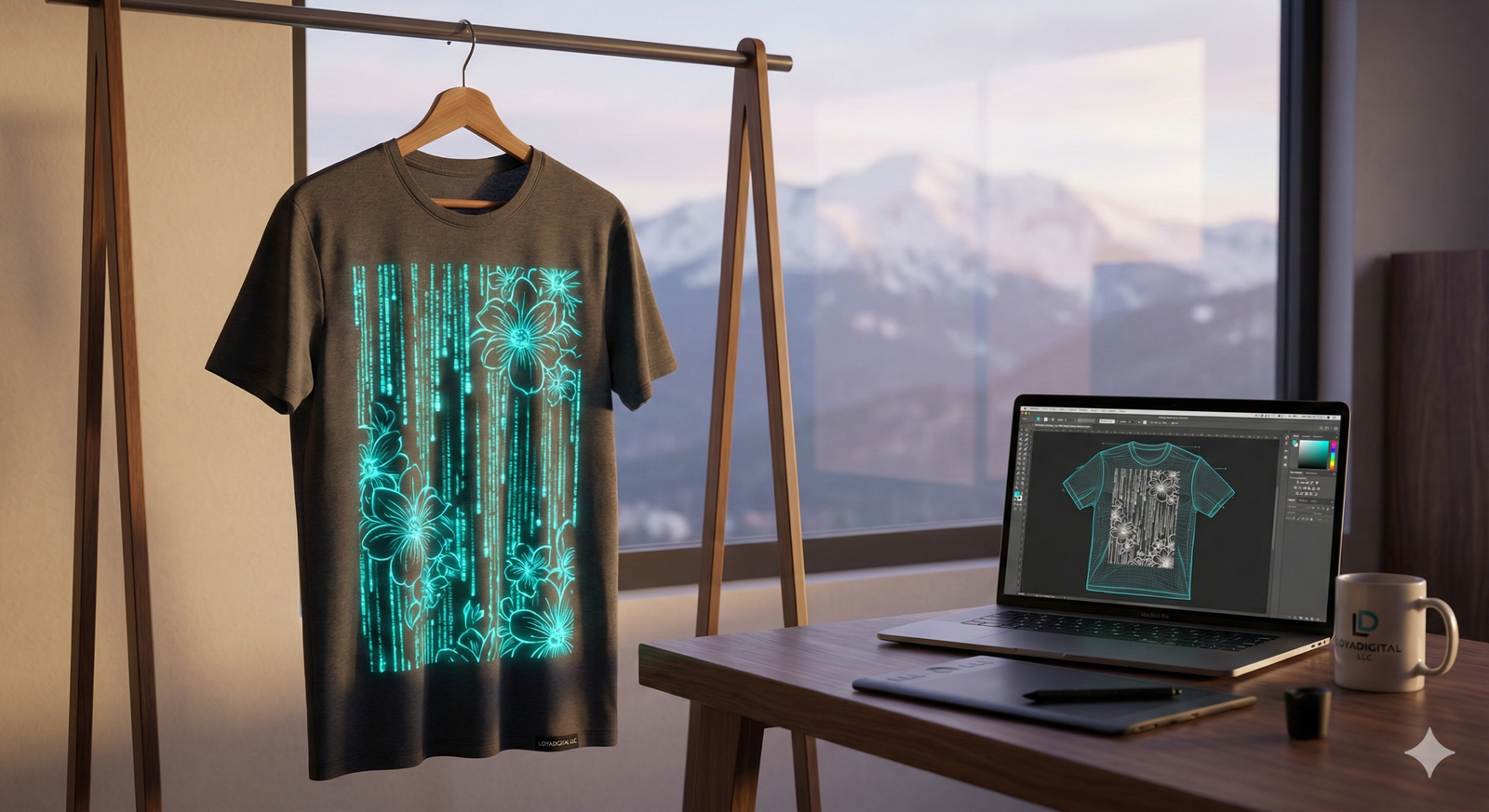
Glitch effects, pixel sorting, and digital distortion are becoming increasingly popular in digital apparel design. These techniques involve manipulating digital data to create visually striking, often surreal, effects. By incorporating these elements, you can add an edgy, avant-garde touch to your designs.
To achieve these effects, designers often use software that can manipulate pixel data, sort, and distort images. The result is a unique aesthetic that can appeal to customers looking for bold, statement pieces.
Cyberpunk, Vaporwave, and Tech Noir Aesthetics
Inspired by futuristic and dystopian themes, cyberpunk, vaporwave, and tech noir aesthetics are making a significant impact on digital apparel design. These styles often feature neon colors, distorted VHS effects, and other retro-futuristic elements.
By embracing these aesthetics, you can create designs that resonate with fans of science fiction and technology. These themes are particularly popular among younger audiences who are drawn to their futuristic and rebellious vibe.
Holographic and Iridescent Design Elements
Holographic and iridescent effects are adding a new dimension to digital apparel. These elements can create a sense of depth and visual interest, making designs more engaging and dynamic. By incorporating holographic and iridescent effects, you can give your designs a futuristic sheen that stands out in the market.
To achieve these effects, designers can use specialized software or techniques that manipulate light and color. The result is a mesmerizing visual effect that can elevate your digital apparel assets and contribute to print-on-demand success.
Typography as the Hero: Lettering-Forward Designs
In the realm of t-shirt graphic design, typography emerges as a powerful tool for creative branding. As we explore the trends shaping the industry in 2026, it becomes evident that typography is not just a design element, but a statement piece that can make or break a design.
The use of typography in wearable art has evolved significantly, with designers now experimenting with various techniques to create unique and eye-catching designs. From custom hand-lettering to bold, oversized typography, the possibilities are endless.
Custom Hand-Lettering and Brush Script Dominance
Custom hand-lettering and brush scripts are gaining popularity, adding a personal touch to t-shirt designs. These unique lettering styles can be tailored to fit specific brand identities, making them a valuable asset in creative branding.
Designers are leveraging hand-lettering to create intricate, bespoke designs that stand out in a crowded market. This trend is particularly evident in the rise of artisanal and handmade branding, where the human touch is celebrated.
| Typography Style | Description | Best Use Case |
|---|---|---|
| Custom Hand-Lettering | Unique, hand-drawn lettering tailored to brand identity | Artisanal branding, bespoke designs |
| Brush Script | Fluid, cursive script that mimics brush strokes | Creative branding, artistic expressions |
| Oversized Bold Typography | Large, bold fonts used for statement pieces | Eye-catching designs, bold statements |
Oversized Bold Typography for Statement Pieces
Oversized bold typography is another trend making waves in the world of t-shirt graphic design. By using large, bold fonts, designers can create statement pieces that demand attention.
This style is particularly effective for brands looking to make a bold statement or convey a strong message. When used correctly, oversized bold typography can elevate a design from simple to striking.
Experimental Type Treatments and Deconstructed Letters
Experimental type treatments and deconstructed letters offer a fresh perspective on traditional typography. By breaking down and reassembling letters, designers can create innovative and thought-provoking designs.
This trend is all about pushing the boundaries of conventional typography, resulting in unique and captivating designs that showcase a brand’s creativity and willingness to experiment.
Sustainability and Nature-Inspired Visual Storytelling
Nature-inspired visual storytelling is taking center stage in 2026, reflecting a growing consumer demand for eco-conscious products. As a result, designers are incorporating elements of sustainability into their digital apparel assets, making them more appealing to environmentally aware consumers.
The shift towards sustainability is not just a trend, but a movement that’s reshaping the print-on-demand industry. By using eco-friendly themes and motifs, designers can create products that not only resonate with their target audience but also contribute to a more sustainable future.
Eco-Conscious Messaging Through Thoughtful Imagery
Eco-conscious messaging is a powerful tool in the world of digital apparel assets. Designers can use imagery that conveys a sense of responsibility towards the environment, such as illustrations of wildlife, forests, or other natural elements. This approach not only appeals to consumers who prioritize sustainability but also adds a layer of depth to the design.
To effectively communicate eco-conscious messaging, designers should focus on creating thoughtful and impactful imagery. This can be achieved by using simple yet powerful visuals that tell a story or evoke an emotional response.
Botanical Illustrations and Organic Shapes
Botanical illustrations and organic shapes are becoming increasingly popular in POD Design Trends 2026. These elements bring a touch of nature to digital apparel, making it more appealing to consumers who value sustainability and eco-friendliness.
By incorporating botanical illustrations into their designs, creators can add a unique and personal touch to their products. Organic shapes, on the other hand, can help to create a more natural and earthy feel.
Earth Tones and Natural Color Palettes
Earth tones and natural color palettes are another key aspect of sustainability in design. By using colors inspired by nature, such as shades of green, brown, and beige, designers can create a cohesive and eco-friendly visual identity.
These natural color palettes not only appeal to environmentally conscious consumers but also add a level of sophistication to the design. By combining earth tones with thoughtful imagery and organic shapes, designers can create truly impactful and sustainable digital apparel assets.
Building Your Digital Apparel Assets Library for Success
Your digital apparel assets library is the foundation upon which your print-on-demand success is built. As a creator in the print-on-demand industry, having a well-organized and versatile library of digital assets can significantly streamline your design process, improve product quality, and enhance your brand’s overall visibility.
Essential File Formats and Resolution Requirements
To ensure your designs are compatible with various print-on-demand platforms and products, it’s crucial to understand the essential file formats and resolution requirements. This knowledge will help you prepare your designs for different printing techniques and garment types.
Vector vs. Raster: Choosing the Right Format
When it comes to digital apparel assets, you have two primary file format options: vector and raster. Vector graphics, such as those created in Adobe Illustrator, are ideal for designs that require scalability without losing quality. They are perfect for typography, logos, and simple illustrations.
Raster graphics, on the other hand, are better suited for complex, detailed images like photographs. They are resolution-dependent, meaning their quality can degrade when scaled up. Understanding when to use each format is key to maintaining the integrity of your designs across different products.
Color Profile Management for Accurate Printing
Color profile management is vital for ensuring that your designs print accurately across various products and materials. Using the correct color profiles helps maintain the intended color representation, reducing the risk of discrepancies between your digital design and the final printed product.
- Use CMYK color mode for print designs to ensure color accuracy.
- Familiarize yourself with the color profiles recommended by your print-on-demand platform.
- Soft-proof your designs to preview how they will appear when printed.
Creating Scalable Designs for Multiple POD Products
To maximize your reach in the print-on-demand market, you need designs that can be easily adapted for various products, from t-shirts to phone cases. Creating scalable designs involves considering the dimensions, material, and printing technique of each product.
Adapting Compositions for Different Garment Types
Different garments have different design requirements. For instance, a design that works well on a t-shirt might not be suitable for a hoodie or a tote bag. Consider the shape, size, and color of the garment when adapting your compositions.
| Garment Type | Design Considerations |
|---|---|
| T-Shirt | Centered designs, scalable to various sizes |
| Hoodie | Consider the hood and pocket areas for design placement |
| Tote Bag | Large, bold designs that cover a significant area |
Mock-Up Preparation for Marketing Your Designs
Mock-ups are essential for showcasing your designs in a real-world context. They help potential customers visualize how your designs will look on the actual product. Prepare high-quality mock-ups by using good lighting, accurate product representations, and lifestyle settings that resonate with your target audience.
Organizing Your Creative Assets for Efficient Workflow
An organized digital apparel assets library is crucial for efficiency and productivity. By categorizing your designs, using clear file naming conventions, and maintaining version control, you can quickly access and update your designs as needed.
- Categorize your designs by theme, product type, or collection.
- Use descriptive file names that include relevant keywords.
- Keep your design files and mock-ups in separate, well-labeled folders.
Conclusion
As you navigate the evolving landscape of wearable art and T-shirt graphic design, staying informed about the latest POD Design Trends 2026 is crucial. From minimalist aesthetics to maximalist revival, and from nostalgia-driven designs to AI-generated visuals, the trends shaping the industry are diverse and dynamic.
To succeed in this competitive market, you must be willing to adapt and innovate continually. By understanding consumer behavior shifts, leveraging platform algorithm changes, and differentiating your designs, you can stay ahead of the curve in T-shirt Graphic Design.
By incorporating these trends and strategies into your design workflow, you can build a successful brand that resonates with your target audience and stays relevant in the ever-changing world of wearable art.
FAQ
What are the primary pod design trends 2026 that will dominate the market?
You will see a fascinating split between ultra-minimalist aesthetics and chaotic maximalism. High-demand pod design trends 2026 include single-line art, Y2K tech nostalgia, and AI-generated generative art. Successfully navigating these trends requires you to balance digital precision with organic, hand-drawn elements that resonate with a more discerning consumer base.
How can you ensure long-term print-on-demand success in a saturated market?
Your print-on-demand success depends on your ability to differentiate through niche storytelling and superior technical execution. By leveraging platforms like Printful or Printify and focusing on high-quality t-shirt graphic design, you can move beyond generic templates. Authenticity, coupled with a deep understanding of platform algorithms, allows you to maintain visibility even as market saturation increases.
Why is building a library of digital apparel assets important for your brand?
Developing a robust collection of digital apparel assets is essential for scaling your business efficiently. When you organize your vector graphics, high-resolution rasters, and mock-up templates in tools like Adobe Creative Cloud, you can quickly adapt your designs for multiple products. This flexibility ensures that your creative branding remains consistent across t-shirts, hoodies, and accessories.
What role does creative branding play in the evolution of wearable art?
In 2026, your creative branding is the bridge between a simple garment and a piece of wearable art. Consumers are no longer just looking for a shirt; they are looking for an identity. By using custom typography and cohesive color palettes inspired by brands like Off-White or Supreme, you transform a basic POD product into a coveted fashion statement.
How should you approach t-shirt graphic design to appeal to eco-conscious consumers?
To capture the growing sustainable market, your t-shirt graphic design should incorporate botanical illustrations, organic shapes, and earth-tone palettes. Aligning your visual storytelling with the values of companies like Patagonia helps you build trust. Using eco-friendly messaging and thoughtful imagery ensures your brand appeals to the ethical priorities of the 2026 consumer.
Can AI-generated art truly enhance your digital apparel assets?
Absolutely. Integrating generative art from tools like Midjourney into your digital apparel assets allows you to create complex, futuristic textures such as glitch effects and cyberpunk aesthetics. However, the key to print-on-demand success is to use AI as a starting point, refining the output to ensure it meets the technical resolution requirements for high-quality printing.
What technical specifications are vital for high-quality t-shirt graphic design?
For your designs to look professional on physical fabric, you must prioritize vector formats for crisp lines and 300 DPI resolution for raster images. Managing your CMYK color profiles is also critical to ensure that what you see on your screen matches the final product delivered by printers like Gelato or CustomCat, preventing color shifts that can hurt your brand reputation.