
Best Air Fryer Liners for 5.8 Quart: Clean, Crisp Results
Introduction
If you love the speed of an air fryer but hate scrubbing the basket afterward, liners can feel like the missing piece. The challenge is that a 5.8-quart air fryer needs the right liner style and fit—too small and it slides, too large and it blocks airflow. This guide breaks down the best air fryer liners for 5.8 quart baskets so you get easier cleanup without sacrificing the crisp, browned finish you bought an air fryer for.
Why Liners Matter in a 5.8-Quart Air Fryer
Cleaner basket, better workflow
Air fryers cook fast, but cleanup can slow you down—especially with sticky marinades, melted cheese, or sugary glazes. A good liner reduces residue on the basket and keeps drips from baking onto the bottom tray. That means:
- Less scrubbing and soaking
- Fewer stubborn burnt-on spots
- Quicker turnaround between batches
The tradeoff: crispness vs. convenience
Air fryers rely on hot air circulation. If a liner blocks airflow, food can turn out less crisp or cook unevenly. The best liners protect the basket while still allowing heat to move around the food—especially important in a mid-size 5.8-quart model where space is limited.
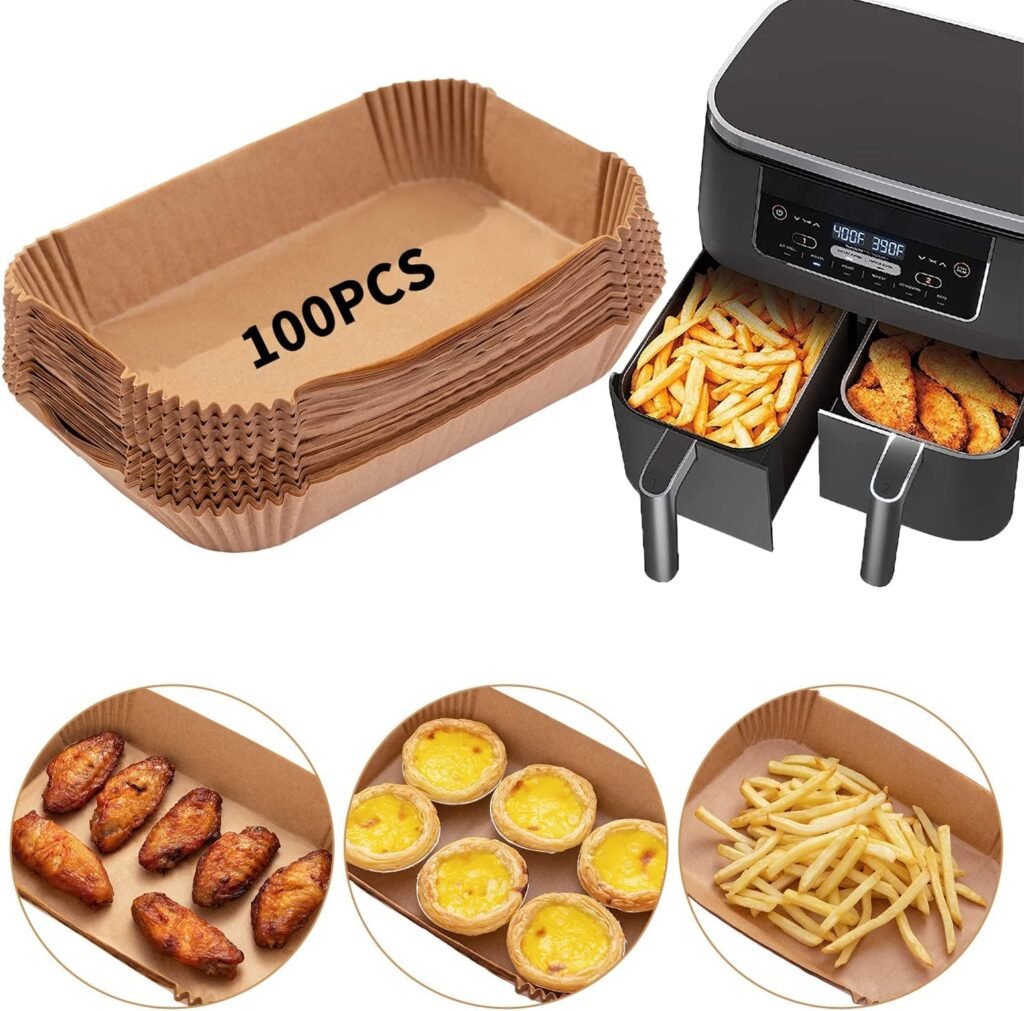
If cleanup is the one thing you dislike about using an air fryer, these disposable parchment paper liners (9×6) are an easy upgrade. They help catch drips and reduce sticking, so you can spend less time scrubbing the basket after cooking.

Types of Air Fryer Liners That Fit 5.8 Quart Baskets
Perforated parchment liners
Perforated liners are designed with holes that let air pass through, helping maintain crisp edges and even browning. They’re ideal for foods that benefit from airflow underneath.
- Best for: fries, wings, breaded chicken, roasted vegetables
- Watch out for: very wet batters that can drip through
Affiliate-friendly tool mention: A pack of pre-cut perforated parchment liners made for 5.8-quart baskets is a practical choice if you want consistent fit without trimming sheets every time.
Solid parchment liners
Solid liners (no holes) are the easiest for catching drips and sauces. They shine when you’re cooking messy foods, but they can reduce crispness if the bottom of the food stays too insulated.
- Best for: saucy wings, glazed salmon, reheating pizza slices, cheese-topped items
- Watch out for: soggier undersides on breaded foods
Silicone liners (reusable)
Reusable silicone liners are shaped like shallow baskets. They’re sturdy, reduce waste, and can be washed by hand or in the dishwasher. Because silicone is thicker than parchment, it can slightly reduce browning underneath—though many people accept the trade for easy cleanup.
- Best for: marinated meats, vegetables, reheating leftovers, sticky foods
- Watch out for: slightly softer bottoms on crispy foods
Affiliate-friendly tool mention: A square silicone air fryer liner sized for 5.8-quart baskets can be a good option if you cook saucy meals often and want a liner that holds its shape.
Foil liners (when they make sense)
Foil can be useful for very messy dishes or when you want quick disposal, but it’s not the best everyday liner. Foil can block airflow if it covers too much surface area, and it can tear when removing food.
- Best for: fatty meats, quick cleanup after sticky glazes
- Watch out for: airflow blockage and sharp edges
How to Choose the Best Air Fryer Liners for 5.8 Quart
Size and shape: round vs. square
Many 5.8-quart air fryers use a squarish basket with rounded corners. For the best fit, you want a liner that sits flat without folding up the sides too high.
- Square liners usually match the basket footprint better and waste less space.
- Round liners can work if the diameter is close to the basket width, but they may curl or leave exposed corners.
If you’re unsure, measure the inner basket base (not the top rim). A liner should be slightly smaller than the base so air can still circulate around the edges.
Heat resistance and food safety
Choose liners clearly labeled for high heat use. Parchment liners should be intended for air fryer or oven use, and silicone liners should be food-grade. This matters most when you preheat or cook at higher temperatures.
Perforations, oil drainage, and crispness
If crispness is your priority, perforated parchment is usually the best starting point. The holes help:
- Air reach the bottom of the food
- Render fat more efficiently
- Reduce steaming from trapped moisture
Solid liners are better when controlling mess is the priority—especially for sugary sauces that can bake onto the basket.
Cleanup goals: quick wipe vs. dishwasher-ready
Think about how you actually cook week to week:
- If you want the fastest cleanup after quick snacks, disposable parchment liners are convenient.
- If you cook saucy meals often and don’t mind washing, a reusable silicone liner can be worth it.
Affiliate-friendly tool mention: A small silicone-tipped set of kitchen tongs can help lift hot liners and food without scratching nonstick baskets—especially helpful when parchment gets greasy and slippery.
Best-Use Scenarios (What to Cook With Which Liner)
Wings, fries, and breaded foods
For foods where crunch matters, start with perforated parchment or no liner at all. If you use a liner:
- Choose perforated sheets for airflow.
- Flip halfway through for even browning.
- Don’t crowd the basket—liners can make overcrowding worse by reducing circulation.
Sticky glazes, cheese, and saucy dishes
Solid parchment or silicone is usually better here. You’ll catch drips before they burn onto the basket, and cleanup becomes a simple lift-and-wipe routine.
- Use solid parchment for single-use convenience.
- Use silicone when you want something sturdier that won’t shift.
Delicate foods: fish, pastries, and veggies
Delicate foods can stick or break when you remove them. Liners help reduce sticking and make transferring food easier.
- Fish: solid parchment or silicone prevents tearing
- Pastries: parchment helps avoid baked-on sugar mess
- Vegetables: perforated parchment helps keep edges browned
Common Mistakes to Avoid
Liner lifting, smoking, and uneven cooking
Never place parchment in an air fryer during preheat unless it’s weighed down. Light sheets can lift into the heating element, which can cause scorching or smoke. Always:
If you’re batch-cooking (fries in one round, chicken in the next), liners can speed things up. Using disposable parchment liners makes it easier to reset the basket between batches with a quick wipe instead of a full wash.

- Place the liner after preheating, or
- Weigh it down with food immediately
Blocking airflow and overcrowding
Air fryers work best with space around each piece of food. Liners reduce exposed basket surface, so airflow becomes even more important. To avoid steaming:
- Cook in batches when needed
- Leave small gaps between items
- Use perforated liners for crisp foods
Using the wrong liner for the recipe
If you’re cooking a breaded cutlet and it turns soft underneath, the liner may be the reason. Swap to perforated parchment, or cook without a liner and do a quick soak afterward.
Step-by-Step: Using Liners for Best Results
Preheat, place, and weigh down
- Preheat the air fryer as you normally would.
- Add the liner only when you’re ready to load food.
- Make sure the liner sits flat and is held down by the food.
Flip timing and batch cooking
For maximum browning:
- Flip or shake at the halfway point.
- For fries or wings, cook in two batches rather than stacking high.
- If using solid liners, consider adding 1–2 extra minutes and flipping to reduce softness underneath.
Fast cleanup routine
- Let the basket cool slightly.
- Lift food and liner together when possible.
- Wipe the basket with a soft sponge; rinse and dry fully before the next use.
Affiliate-friendly tool mention: A soft, non-scratch sponge set designed for nonstick cookware is useful for quick wipes when you cook without liners or when oil escapes around the edges.
FAQ
Do I need special liners for a 5.8-quart air fryer?
You don’t need a specific brand, but size and shape matter. Liners that match the basket base (often square with rounded corners) fit better, stay flatter, and block less airflow.
Are perforated liners better than solid liners?
Perforated liners are usually better for crisp foods because they allow airflow under the food. Solid liners are better for saucy or sticky foods where preventing drips matters more than maximum crispness.
Can I use regular parchment paper instead of air fryer liners?
Yes, as long as it’s parchment (not wax paper) and it’s weighed down by food. Cut it to fit the basket base and avoid letting it touch the heating element.
Do silicone liners reduce crispiness?
They can slightly reduce browning on the bottom because silicone is thicker and less breathable than parchment. Many people still prefer them for messy foods and easy washing.
Why does my liner blow up into the fan or heating element?
This happens when parchment is placed in the basket without food holding it down, especially during preheat. Add the liner only when ready to cook, and weigh it down immediately.
Conclusion
The best liner for your 5.8-quart air fryer depends on what you cook most. If crispness is the goal, perforated parchment liners are usually the easiest win. If you cook sticky or saucy foods, solid parchment or a reusable silicone liner can save serious cleanup time. Measure your basket base, choose a liner that sits flat, and use it in a way that preserves airflow. With the right match, you’ll spend less time scrubbing and more time actually enjoying the convenience of air frying.